
Parker Sullivan · 3 October 2026
Tracing Connections Between Visual Mapping Techniques and Textual Note Systems That Strengthen Resilience in Lone Operator Web Projects
Visual mapping techniques such as mind maps, flowcharts, and concept diagrams often intersect with textual note systems including outlines, bullet hierarchies, and annotated logs when independent operators manage web projects alone, and data from various productivity studies show these intersections create structured approaches that support project continuity amid shifting priorities or resource constraints. Researchers at institutions across multiple regions have documented how operators combine graphical overviews with detailed written records to track dependencies in site architecture, content updates, and maintenance schedules, which in turn reduces downtime risks during unexpected disruptions.
Core Elements of Visual Mapping in Solo Operations
Operators frequently begin by constructing visual maps that represent site hierarchies, user flows, and technical components as interconnected nodes, while these maps allow quick identification of bottlenecks without requiring extensive text review at every stage. Studies from the University of Melbourne indicate that visual representations help lone developers maintain an overview of complex systems where textual descriptions alone might fragment attention across numerous details, and integration with textual annotations adds precision by embedding specific metrics or code references directly on map elements. In October 2026, industry reports noted increased adoption of hybrid tools that support both diagram export and linked note imports, enabling operators to update visual layouts alongside evolving project documentation without losing historical context.
Textual Note Systems and Their Role in Documentation
Textual note systems provide the granular layer that visual maps often lack, as operators record timestamps, decision rationales, and troubleshooting steps in searchable formats that support long-term retrieval. According to findings published by the Australian Institute of Digital Productivity, consistent use of categorized textual logs correlates with faster recovery from code conflicts or content inconsistencies in standalone sites, since operators can cross-reference entries against visual diagrams to isolate issues precisely. Those who manage multiple projects simultaneously often discover that embedding hyperlinks within notes connects back to map sections, creating bidirectional navigation that strengthens overall system awareness without adding layers of external software.
Integration Patterns Observed Across Independent Web Projects
Patterns emerge when operators link visual nodes to corresponding textual entries through shared identifiers, and this practice allows real-time synchronization of changes across both formats during iterative development cycles. Experts observing European digital economy initiatives have reported that such dual-format approaches appear in projects where operators handle everything from initial design through ongoing SEO adjustments, as the visual component highlights structural relationships while text supplies implementation specifics. One documented case involved an operator who maintained a central flowchart for site navigation alongside a parallel note repository that logged performance data, resulting in reduced error recurrence rates over multi-month periods because updates in one system prompted reviews in the other.
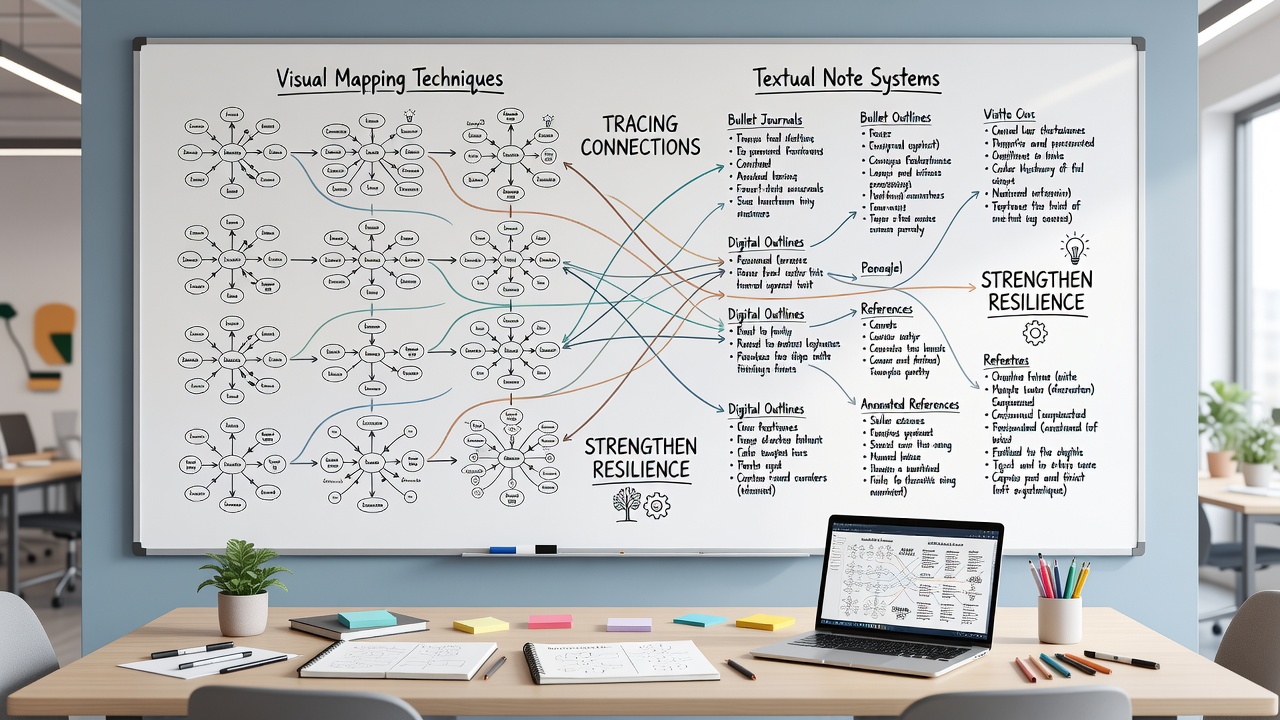
What's interesting is how these connections scale with project complexity, since operators handling resource-limited environments use the combined system to prioritize tasks based on both spatial relationships shown in maps and priority flags recorded in notes. Data from Canadian digital skills assessments reveal that practitioners who adopt this method report sustained output levels during periods of reduced availability, as the visual overview prevents loss of sight on broader goals while textual details preserve execution history.
Resilience Factors in Lone Operator Contexts
Resilience in these projects often stems from the ability to reconstruct project states quickly after interruptions, and the pairing of visual mapping with textual notes facilitates this by offering multiple access points to the same information. Observers note that when a map becomes outdated, the linked textual records provide fallback details that operators use to rebuild diagrams accurately, whereas isolated textual systems might require more time to reconstruct relational context. Research indicates operators who apply these techniques experience fewer cascading failures in web infrastructure because early visual detection of potential overload points pairs with documented mitigation steps that can be enacted immediately.
Practical Applications and Supporting Evidence
Practical applications include mapping content calendars visually to identify seasonal gaps, then annotating each node with textual performance targets drawn from analytics platforms. A report from the EU Agency for Digital Transformation highlights measurable improvements in project uptime among operators who maintain these integrated records, particularly when external factors like hosting changes or algorithm updates demand rapid response. And yet the effectiveness depends on consistent cross-referencing routines that operators establish early, allowing the system to evolve alongside the project rather than requiring periodic overhauls.
Conclusion
Connections between visual mapping techniques and textual note systems continue to support resilience for lone operators by distributing cognitive load across complementary formats that together cover both relational and factual dimensions of web projects. Evidence from diverse regional studies shows measurable advantages in continuity and recovery when these methods are applied together, while ongoing tool developments in late 2026 further streamline the integration process for independent practitioners managing standalone digital properties.